The Grant Maze, Mapped: Plain-English Funding Options for Exmoor Firms This Winter
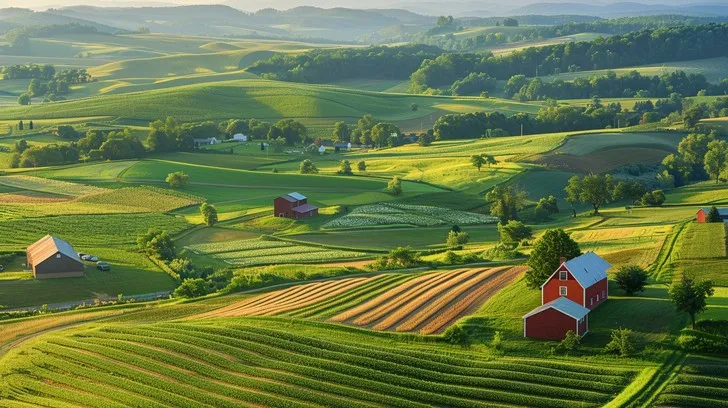
Photo: rural small business owner reviewing paperwork and grant forms in Exmoor office, via images.stockcake.com
Grants have a language problem. By the time a scheme reaches a small Exmoor business, it has usually been through several rounds of policy translation: eligible activity, capital expenditure, subsidy control, defrayal. None of it is designed to be difficult, but it often is.
The trick is not to understand every acronym. It is to work out quickly whether an opportunity is worth the paperwork. With the financial year ending on 5 April 2027, this is a sensible moment to look at what is available, what you might qualify for and what can wait.
Grants, reliefs and support are not the same thing
A grant is money for a specific project. A rate relief is a discount on your business rates. Business support is usually free advice, a workshop or a contact who knows the local landscape. Mixing them up is one of the quickest ways to waste a morning.
Rate relief is often the fastest win. Small Business Rate Relief and Rural Rate Relief are worth checking with Somerset Council or North Devon Council, depending on where your premises sit. The rules are not identical everywhere, and the billing authority will want evidence rather than a hopeful email. If you have never checked your rates, do that before you chase a grant.
Where to look first in and around Exmoor
Start with the council that collects your business rates. Their business support pages usually list current rate reliefs, local grant rounds and the phone number of someone who can tell you whether a scheme is still open.
The Heart of the South West Growth Hub is a useful next stop for signposting. It does not hand out cash itself, but it can point you towards programmes that are live and explain what an adviser can help with.
For land-based businesses and rural diversification, the Exmoor National Park Authority is worth a conversation, particularly around Farming in Protected Landscapes where rounds and availability can change. Defra and the Rural Payments Agency remain the main route for farming and diversification grants, though scheme names and windows move around. Use the current pages, not a screenshot from an old webinar.
Some local programmes funded through earlier national funds have closed or changed shape. That is normal. Treat scheme names as search terms rather than gospel, and always check the date on the guidance.
Eligibility: the five questions that matter
First, location. Some schemes are tied to a council area, a postcode or a protected landscape. A beautiful business on the wrong side of a boundary can still be outside the rules.
Second, size. Most rural grants are aimed at SMEs, but the definition can include employee numbers, turnover and balance sheet totals. Check which one applies.
Third, sector. Tourism, food and farming often feature, but retail, craft and hospitality may be covered by different pots. Do not assume your business type is excluded until you have read the eligibility section.
Fourth, match funding. Many grants expect you to pay a share of the project cost, often between 40% and 60%. If the scheme pays 50%, you still need to find the other 50% and carry the cashflow until the claim is paid.
Fifth, timing. Can you wait for a decision? Can you pay suppliers upfront? Can you start after approval rather than before? If the answer to any of those is no, a grant may be the wrong tool this quarter.
Timelines: the bit that catches people out
Grant timetables are not shop timetables. A simple expression of interest can take a couple of weeks. A full application, assessment and contracting process can take six to twelve weeks, and some programmes take longer. If there is a panel date, work backwards from it.
Do not order equipment or start work before you have written approval unless the scheme explicitly allows it. Retrospective claims are usually rejected, and that is a painful way to learn the rules.
Grants are often paid in arrears, after you have spent the money and submitted evidence. That means you need to be able to fund the project in the meantime. If cashflow is tight, a smaller rate relief or a free advice session may be more useful than a large grant you cannot bridge.
The financial year end is not a magic deadline for every scheme. Some close earlier, some run on a rolling basis and some are already fully allocated. Check the current status before you build a plan around it.
Paperwork pitfalls
Most grant applications fail on evidence, not ambition. Keep three quotes where required, make sure invoices are addressed to the business, and keep bank statements that show the money moving. If you are claiming match funding, be ready to prove it.
Read the scoring criteria properly. If the form asks how the project will create jobs, protect a rural service or increase visitors, answer that question directly rather than writing a general history of the business. Photos of before and after can help, as can a simple business plan that shows the numbers.
Do not ignore subsidy control. The old state aid rules have been replaced, but the principle remains: public funding should not give you an unfair advantage. Declare what you have received if asked, and keep a record.
VAT can also trip people up. If you are VAT registered, check whether the grant is calculated on gross or net costs. A difference of 20% can change the whole project.
A quick test before you apply
Ask yourself four questions. Would you do this project anyway, perhaps on a smaller scale? Does it make the business more resilient, more visible or more efficient? Can you afford the match funding and the wait? Do you have the time to do the paperwork properly?
If the answer is no to most of those, walk away. A grant is a tool, not a strategy. The best applications are usually for something the business already needs, not something invented to fit a fund.
Start with your council, ask for a named contact, keep your records tidy and give yourself more time than you think. The jargon will still be there, but the path through it will be a lot clearer.