Two Bars and a Prayer: Keeping an Exmoor Business Trading on a Weak Signal
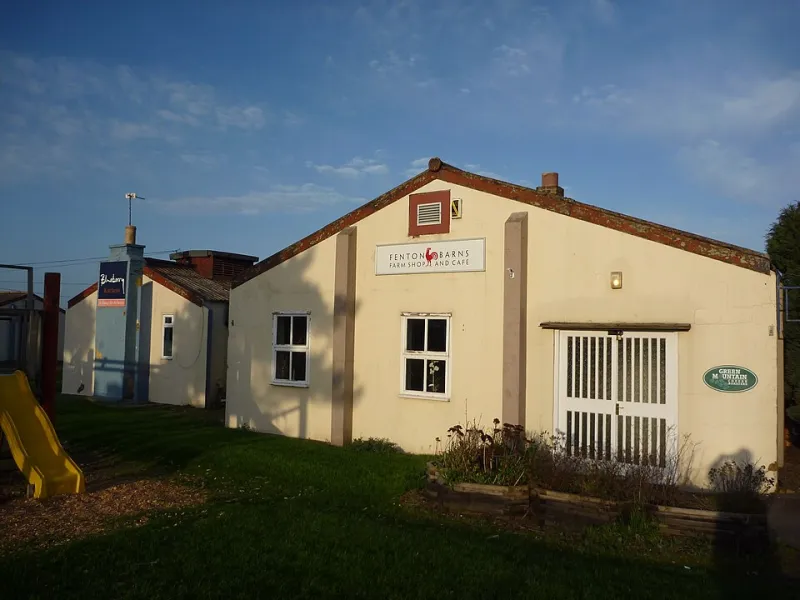
Photo: Richard West , CC BY-SA 2.0, via Wikimedia Commons
There's a particular dance every Exmoor trader learns. The customer's card is in the machine, the machine is in the air, and you're standing in your own doorway holding a black rectangle towards the sky like you're trying to send a message to the mainland.
It happens in Porlock during a squall. It happens in a farm shop up a combes where the trees close over the lane. It happens in a village hall pop-up where three networks manage one bar between them. Nobody talks about it much, because it sounds like complaining — but connectivity quietly shapes which businesses can grow here and which ones stay small on purpose.
This isn't a piece about poor signal being a nuisance. It's about the fact that most rural firms are running a 2026 business on infrastructure that assumes a town centre. And it's about the relatively cheap, relatively unglamorous things you can do before the winter takes another bite.
The real problem isn't the signal — it's the assumption
Ask an owner what happens when the line drops and you usually get a shrug: it comes back on eventually. That works until the day it doesn't — a Friday in half term, a wedding booking, a delivery driver needing a signature, a food business that takes deposits.
The assumption underneath is that connectivity is a constant, and everything else is a variable. In practice it's the opposite. Signal strength on Exmoor moves with the seasons: leaf cover in summer, wet foliage and low cloud in autumn, wind rattling a marginal fixed-wireless link, and the occasional power cut that takes the router, the till and the digital phone line down in one go.
That last one matters more than it used to. As the old copper phone network is retired and voice moves onto broadband, the line that used to keep working in a power cut now depends on the thing that fails first. If your "landline" is a plug into the router, you don't have a backup — you have a second way of failing.
Build a ladder, not a miracle
Forget finding one perfect solution. The firms that cope best run three tiers, and everyone on the team knows them.
Tier one: keep trading offline. Most modern card terminals and card-reader apps will process payments offline for a while, storing them to send later. Know your limits before you need them — many providers cap offline transactions (often around a hundred pounds or so per transaction, sometimes lower), and you carry more of the risk if a card turns out to be dodgy. If you take larger payments — a shepherd's hut deposit, a wedding bar tab — decide now whether you'll take a deposit by bank transfer instead.
Tier two: a second network. Different networks have genuinely different coverage on Exmoor, and it varies lane by lane. A cheap pay-as-you-go SIM on a rival network, kept live in a drawer with a spare handset, costs a few pounds a month and has saved more than one Saturday service. Dual-network or multi-network SIMs do the same job for a router, though read the fair-use terms.
Tier three: the low-tech fallback. A cash float, a paper order pad, a printed booking sheet, a pen that works. Boring, and the only tier that has never let anyone down.
What's actually worth buying
- An external antenna. If you're relying on a 4G or 5G router, an aerial on the roof or gable, aimed at the nearest mast, often turns a hopeless signal into a usable one. It's one of the cheapest upgrades in rural business.
- Wi-Fi calling on staff mobiles. Free, and it means the kitchen can still ring the office when there's no mobile signal but the broadband is up.
- Fixed wireless and altnets. Providers such as Wessex Internet, Airband, Jurassic Fibre, Truespeed and Gigaclear have been steadily pushing into Devon and Somerset villages, and Openreach fibre has reached more premises than many owners realise. Worth re-checking your postcode once a year rather than assuming nothing has changed.
- Satellite, kept in its place. Services like Starlink are genuinely useful for a farm office, a holiday let or a second site with nothing else. They're less ideal as the sole lifeline for a till — kit cost, latency and one dish per location all add up. Fine as tier two, risky as tier one.
How to talk to providers without being fobbed off
Call centres deal in postcodes, not in the fact that your yard sits behind a stone wall in a dip.
Go in with evidence. Check the Ofcom coverage checker and the Openreach fibre checker before you ring, screenshot both, and send them with your enquiry. Ask for a site survey rather than a sale. Get contract length, price-rise clauses and exit terms in writing before you sign anything that runs beyond a year.
Keep a simple outage log — date, time, how long, what it stopped you doing. Providers respond to patterns in a way they never respond to adjectives. And if a repair drags on, ask about the automatic compensation scheme for broadband and landline faults; it exists, and it's rarely offered unprompted.
If you're in a hamlet where nobody has decent service, don't go it alone. Parish councils, clusters of farms and groups of village businesses have far more luck than individuals, whether through community fibre schemes, Project Gigabit build contracts or simply a collective complaint that lands on the right desk.
The pre-winter checklist
Something to work through in the next few weeks, before the clocks feel properly dark:
- Test your card machine's offline mode. Actually do a small transaction with the router unplugged.
- Check your offline transaction limits and write them on a card behind the till.
- Confirm which network each staff mobile is on — and whether you have a second one.
- Clear leaves and debris from around any dish or antenna; check the cable entry hasn't filled with water.
- Put a surge-protected, battery-backed supply on the router if you haven't already.
- Print a paper version of tomorrow's bookings, orders and deliveries.
- Keep a labelled cash float and a receipt book.
- Note the phone numbers of your broadband and card provider somewhere that doesn't need a screen.
- Ask your provider, in writing, whether any planned works affect your exchange or cabinet this winter.
- Re-check altnet availability for your postcode — it changes faster than the marketing suggests.
The cheapest upgrade is a habit
None of this is glamorous, and very little of it needs a capital budget. What it needs is a bit of honesty about where you trade, and the decision to stop treating a dropped line as bad luck.
Train the team on the fallback, tell regulars what happens when the machine goes quiet, and take deposits on anything big. On Exmoor, two bars and a prayer will get you through most days. It's the other days that cost you the season.