The Village Hall Price Rise: Charging More Without Becoming the Pub Gossip
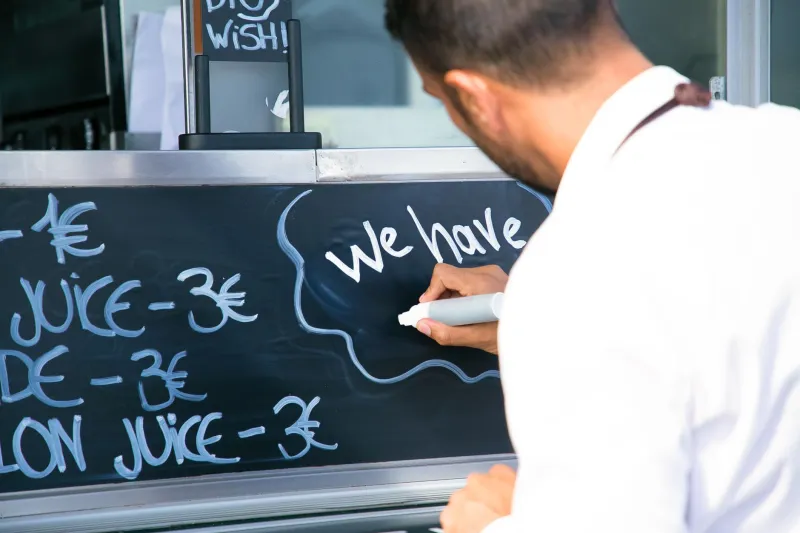
You are behind the counter on a Saturday morning in Dulverton, or maybe Porlock, and a regular called Margaret is telling you about her grandson’s football match. You nod, smile, and then remember: from January, her usual pasty needs to go up by 40p. You know her dog’s name. You know which table she likes. Suddenly the spreadsheet feels less like business planning and more like a personality test.
That is the odd truth of pricing in a rural economy. In a city, a price rise is a line on a menu. In Exmoor, it is a conversation at the school gate, a question in the post office queue, and possibly a topic at the village hall committee meeting. It is still a commercial decision, but it is also a community act. The script matters as much as the maths.
Start with the number, not the nerve
Before you worry about how to say it, work out what you actually need. Not what feels brave, not what feels cheeky, and definitely not what you can sneak through without anyone noticing. Get a simple cost card for your main lines and update it now, while the winter bills are still in your head.
Take a caf\u00e9 selling a cheese scone at \u00a33.50. The ingredients, energy, packaging, card fee, and a fair share of wages might come to \u00a31.40. That leaves \u00a32.10 gross profit. If your costs rise by 30p, you can either absorb it, put the price up by 30p to keep the same cash margin, or put it up by a bit more to protect your percentage margin. There is no single right answer. There is only a right answer for your business.
Do not forget the things that quietly went up this year: insurance, mileage, waste collection, accountancy, and the cost of simply keeping the lights on in an old building. If you only count flour and butter, you will undercharge. If you count everything but then round down because you feel awkward, you will undercharge twice.
A useful test is to ask what happens if you sell the same number of items at the new price. If the answer is still a thin margin, the rise is too small. If the answer means you can finally replace the fridge that hums like a tractor, you are probably in the right area.
Notice is a courtesy, not a confession
Give people time. At least four weeks, ideally more. In early November, you still have room to tell regulars before the Christmas rush, put a sign on the counter, mention it in your email list, and say it plainly on social media. Do not wait until the first week of January and hope nobody notices. They will notice. They always notice.
Choose a clean date, such as 1 January, and stick to it. A clear start date is kinder than a gradual drift where some customers pay the old price and some pay the new one. It also saves your staff from having to remember who was told what.
Write the notice in plain English. Something like: from 1 January, our pasties will be \u00a33.95 instead of \u00a33.50. Our costs have gone up, including ingredients, energy, and wages. The recipe and size are staying the same. Thank you for supporting a small local business. That is enough. You do not need a paragraph about the global economy.
The script: say it once, say it straight
When someone asks, do not apologise your way through it. A price rise is not a moral failure. It is the cost of staying open. Try this: our costs have gone up, so from January a pasty is \u00a33.95. Same size, same recipe. Thanks for keeping us going.
Avoid the words just, only, and sorry repeated three times. Avoid blaming customers for not buying enough. Avoid saying unprecedented unless you can explain what it means while holding a tray of scones. If someone pushes back, listen, then repeat the reason and the date. You do not have to win the argument. You just have to be clear.
If you have staff, brief them properly. Give them the exact wording, the date, and permission to say I will pass that on rather than inventing a reason. A confused explanation at the till undoes a good sign on the door.
Soften with structure, not discounts
You can make a rise easier without pretending it is not happening. Offer a smaller portion at the old price if that genuinely works for your kitchen. Bundle a coffee and a pastry at a slightly better combined price. Bring in a loyalty card that rewards regulars over time. For producers, a standing order or a veg box subscription can spread the cost and give you predictable income.
Small extras help too: local delivery over a certain spend, a recipe card in the bag, or a proper welcome for the people who come every week. What you are trying to avoid is panic-discounting the thing you just repriced. If you put the price up and then immediately run a half-price offer, you have taught customers that the new price is not real.
The village hall test
Imagine standing up at the village hall and explaining your rise in one sentence. If it sounds fair, sensible, and human, you are ready. If you would rather hide behind the tea urn, rewrite it. That test is not about being popular. It is about being honest in a place where reputation travels faster than broadband.
Some people will grumble. That is normal. Track your sales for six weeks after the change. If volume drops more than you expected, look at your extras, your opening hours, and your communication before you lurch into a discount. Do not reverse the price in a panic on a wet Tuesday. Give it a fair run.
A short checklist before January
Update your cost card. Pick your date. Write the counter sign. Draft the email. Brief the staff. Choose one softer option, not five. Decide when you will review it. Then say it out loud to someone who will tell you if it sounds like a robot.
The regulars who know your name are not the obstacle to a viable business. They are the reason it exists. Treat them like adults, give them notice, and explain the number without a wobble. Most of them will still be there in February, arguing about the weather and buying the same pasty.